While nobody can predict exactly what the next twelve months will bring for businesses, experienced business owners can draw on their knowledge, insights, and industry experience to anticipate what lies ahead.
As we approach the end of 2026, we ask five leading business owners to share their insights on what may change in the business landscape in 27…
-
Business founders will often be much older, or younger, than you’d expect
“My prediction is that 2027 will be the year the typical founder no longer looks like the typical founder,” says Robert Engeham, founder and CEO of Your Company Formations – one of the UK’s leading company formation and business support providers.
“We formed more than 286,000 companies since 2016, which gives us a fairly good picture of who’s starting businesses, and we’re seeing many more people in their 60s and 70s forming companies with us, up by around a third compared with a few years ago. At the same time, under-25s are now forming companies at the same rate as everyone else, which wasn’t the case five years ago.
“We have customers registering companies on their phones at two in the morning and others doing so in retirement, and it’s actually the group in the middle that we’re seeing slightly less of. I can’t see that slowing down in 2027; the market is broadening at both ends,” he adds.
Since launching the business in 2014, Your Company Foundations has helped more than one million entrepreneurs and business owners.
-
Businesses that ignore cognitive health will suffer for it
“Cognitive burnout becomes a wider problem,” predicts Natale Mackenzie, a Cognitive Strategist for founders and CEO of BIS Services.
“We’ve spent the last few years throwing technology at productivity, automating the easy stuff and expecting people to absorb the complexity that’s left. What remains is the hard cognitive work: judgement calls, relationship management, creative problem-solving.
“We’re asking people to do more of that, faster, with brains that are under-recovered and overstimulated. In 2027, I think we’ll start seeing that cost show up in ways that are harder to ignore, in leadership performance, in decision quality, in retention at senior levels.
“The businesses that get ahead of it will be the ones who start treating cognitive capacity as an operational asset, not a personal responsibility of employees.”
-
Personal brand will be key
“I think personal brand will become a much bigger part of how businesses win work in 2027,” explains award-winning marketing expert Rebecca Berry (pictured below), founder of Berrykin Marketing.
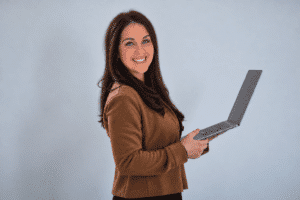
AI makes it easier for every company to publish polished content, which makes it more valuable to hear directly from the people doing the work. I’d like to see more founders and senior leaders talk openly about the decisions they’ve made, what they got wrong, and what they’d do differently. That’s the stuff that gives a potential customer a feel for who they’d actually be working with!
“My prediction for 2027 is that buyers will find and research suppliers across more places, from AI-assisted search to industry communities and private recommendations. That makes it harder to give any one channel credit for a sale. So, for SMEs, I’d put the budget behind becoming better known in the markets they want to win, and give repeat business and referrals the same attention as new leads,” she adds.
-
The nervous system will go mainstream
We’ve all heard of the nervous system, but it should be on every business owner’s radar in 2027.
“In health, I think 2027 is when the nervous system goes mainstream. People will understand when they’re in threat, when they’re in drive, and how to get back to soothe, and they’ll use body and breath tools every day, not only when things fall apart. In business, I think human connection becomes the edge.
“As technology does more of the doing, warmth, trust, and real community will be what sets people apart,” says Psychotherapist Dr Aditi Bhalla, who helps founders through burnout.
-
The rise of specialist brands
Will 2027 be the year of the small brand advantage? Anais Lombard (main picture), an experienced brand builder and founder of Morning Marvels, a brand dedicated to creating soft, sensory-friendly clothing for children, seems to think so.
“I think being a small, specialist brand could become a bigger advantage. As AI makes polished content easier to produce, I suspect customers will become more interested in who is behind a business and whether they actually understand the problem they’re solving.
“When you’re buying clothes for a child who finds getting dressed distressing, that understanding means something. My prediction is that personal recommendations, shared experiences, and trust will carry more weight in children’s clothing. For founders like me, whose businesses grew out of family life, something is encouraging about that: the messy, very human reason you started could become your strongest asset,” she adds.